Investing In Our Workforce
Investing In Our Workforce

Sep
06
2024
NC Tri-Share Serves its First Family, Increasing Access to High-Quality, Affordable Child Care
The NC Tri-Share Child Care Pilot Program began beta–testing and registering families in July. NC Tri-Share is a program that creates a public/private partnership to share the...

Aug
02
2024
For employees who have recently given birth, returning to work can be challenging for many reasons. For those who breastfeed, many are met with barriers—such as a lack of adequate break time to breastfeed, few private and comfortable spaces...
Jun
09
2022
“Early childhood is a public good and needs to be invested in”, Teri Talan, Senior Policy Advisor to the McCormick Center for Early Childhood Leadership
Early childhood professionals met at the final 2022 Smart Start Conference Featured Session to discuss...
Nov
18
2021
Child care is an essential service for North Carolina families, ensuring parents can work while their young children learn and grow. However, the child care industry has been heavily affected by the pandemic. The reality of low pay for...
Oct
28
2021
by Lisa Familo, Executive Director, The Iredell County Partnership for Young Children
The Need
COVID-19 has exposed the fragility of our early education workforce, all of which predated the arrival of the pandemic. Early childhood educators are the workforce behind the...
Oct
21
2021
by Amy Cubbage, NCPC President
Along with our partners at The Hunt Institute, Smart Start hosted a roundtable this week with leaders from the White House and the U.S. Department of Education. There weren't TV cameras or microphones; no podiums...
Oct
06
2021
by Amy Cubbage, President of The North Carolina Partnership for Children (NCPC)
Too many of the professionals who care for and educate our youngest children receive wages that aren’t nearly enough to make ends meet. Many work without access to...
Aug
03
2021
This is a joint blog post published by Marsha Basloe, President of Child Care Services Association, and Amy Cubbage, President of the North Carolina Partnership for Children. You may download this post as a PDF here.
It’s time to talk about the workforce...
Jul
29
2021
“Working in ECE begins a route to poverty for many”
- Dr. Ashley Williams, Center for the Study of the Child Care Employment.
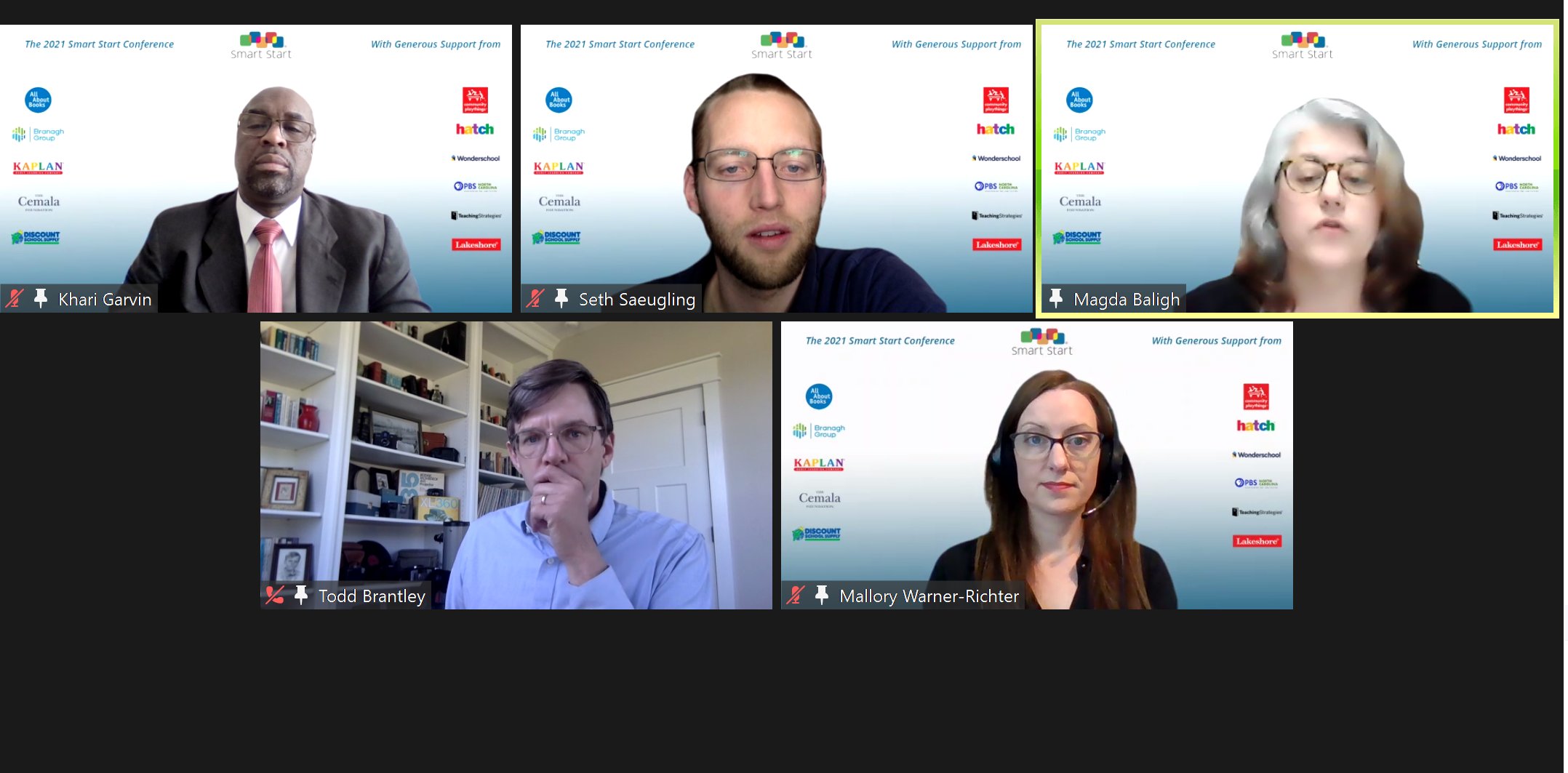
Smart Start conference attendees joined together to explore challenges facing the early childhood workforce, actions being taken by...
Jul
23
2021
“Rural is not a problem to be solved, it is an opportunity to be unlocked.”
Smart Start Conference attendees heard this important statement from Todd Brantley, vice president of Public Affairs for NC Rural Center, during the conference’s first Featured...